



In the world of medical monitoring and respiratory care, having the right equipment is a lifeline. Whether you are managing a chronic condition like COPD, recovering from surgery, or supporting a loved one’s recovery, an oxygen concentrator is one of the most vital tools for your home.
As a leading oxygen concentrator supplier in Nepal, Neomeditech Biomedical Solutions is dedicated to ensuring that every household has access to medical-grade air and the professional knowledge to use it safely.
Why an Oxygen Concentrator is a Home Essential
Unlike traditional oxygen cylinders that require frequent refilling, an oxygen concentrator is a sustainable solution. It pulls in ambient air, filters out nitrogen, and delivers a continuous stream of concentrated oxygen.
What to Look For:
- Purity Levels: High-quality machines should consistently deliver oxygen saturation between 93% and 96%.
- Flow Rate: Depending on your prescription, you may need a 5-liter or 10-liter per minute (LPM) unit.
- Local Support: Choosing a local oxygen concentrator supplier in Nepal ensures you have access to technical maintenance and spare parts without long wait times.
7 Essential Tips for Using Your Oxygen Concentrator Correctly
While these devices are designed for simplicity, a few small details can make a big difference in your therapy.
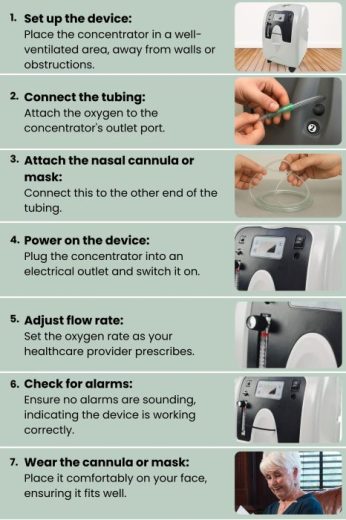
1. Optimize Placement for Airflow
Movement of air is the friend of a concentrator. Place your device at least 12 inches away from walls, curtains, or furniture. This prevents the motor from overheating and ensures it pulls in the cleanest air possible.
2. Monitor with Precision
Always use a pulse oximeter (oxygen sensor) to verify that the machine is working for you.
- Normal Range: Typically between 95% and 100%.
- Warning Zone: If your readings consistently fall below 92% despite using the concentrator, it is time to consult your healthcare provider.
3. Maintenance Checklist
- The Filter: Wash the external particle filter once a week with warm water and let it air dry completely.
- The Water: If you use a humidifier bottle, use only distilled water to prevent mineral buildup in the tubing.
4. Check for “Interference”
When using your oximeter to check your levels, ensure your finger is free of dark nail polish, isn’t cold, and is held below heart level. This ensures your data is accurate.
5. Position the Cannula Correctly
Ensure the nasal prongs are curved downward and inserted comfortably into the nostrils. If the air feels dry, check your humidifier water levels.
6. Keep a Logbook
Recording your SpO2 levels and the hours used on the machine twice a day can help your doctor spot trends during your next check-up!
7. Have a Backup Plan
Since these machines run on electricity, they will stop during a power outage. We highly recommend having a backup oxygen cylinder or a dedicated UPS system to ensure uninterrupted therapy.
Quick Troubleshooting Guide
| Issue | Potential Cause | Fix |
| No Airflow | Kinked tubing or loose bottle | Straighten the cannula; tighten the humidifier cap. |
| Beeping Alarm | Power failure or overheating | Check the power cord; ensure the machine has space to breathe. |
| Low Oxygen Light | Dirty filter or blocked intake | Clean the air filter and restart the machine. |
Frequently Asked Questions (FAQ)
What is the difference between an oxygen concentrator and a cylinder?
A cylinder holds a fixed amount of compressed oxygen and needs to be refilled or replaced once empty. An oxygen concentrator is an electric device that produces an endless supply of oxygen by filtering the surrounding air.
Can I run my oxygen concentrator 24/7?
Most medical-grade concentrators from a reputable oxygen concentrator supplier in Nepal are designed for continuous operation. However, it is always best to give the machine a short break if your prescription allows, or ensure it is kept in a very well-ventilated area to prevent overheating.
Does an oxygen concentrator work during power cuts in Nepal?
Since these machines run on electricity, they will stop during a power outage. We highly recommend having a backup oxygen cylinder or a dedicated UPS/Inverter system to ensure uninterrupted therapy.
How often should I change the nasal cannula?
For hygiene and efficiency, it is recommended to change the nasal cannula every 2 to 4 weeks. If you have recently been sick with a cold or flu, change it immediately.
Neomeditech Biomedical Solutions: Your Trusted Partner
Finding a reliable oxygen concentrator supplier in Nepal shouldn’t be a source of stress. At Neomeditech, we provide more than just equipment—we provide peace of mind through setup assistance, technical support, and high-quality medical technology tailored for the local environment.
Pro Tip: Keep a small logbook next to your device. Recording your SpO2 levels twice a day helps your doctor spot trends and adjust your treatment plan during your next check-up!

I am 6 feet tall and 220 lbs. This shirt fit me perfectly in the chest and shoulders. My only complaint is that it is so long! I
like to wear polo shirts untucked. This shirt goes completely past my rear end. If I wore it with ordinary shorts, you
probably wouldnt be able to see the shorts at all – completely hidden by the shirt. It needs to be 4 to 5 inches shorter
in terms of length to suit me. I have many RL polo shirts, and this one is by far the longest. I dont understand why.
If I wore it with ordinary shorts, you
probably wouldnt be able to see the shorts at all – completely hidden by the shirt. It needs to be 4 to 5 inches shorter
in terms of length to suit me. I have many RL polo shirts, and this one is by far the longest. I dont understand why.
My husband always says that the Lauren polos fit better and last longer than any other brand.I love the new “heathered” color and the price is always excellent through shop
This site browses very quickly, do you have any other demo templates?